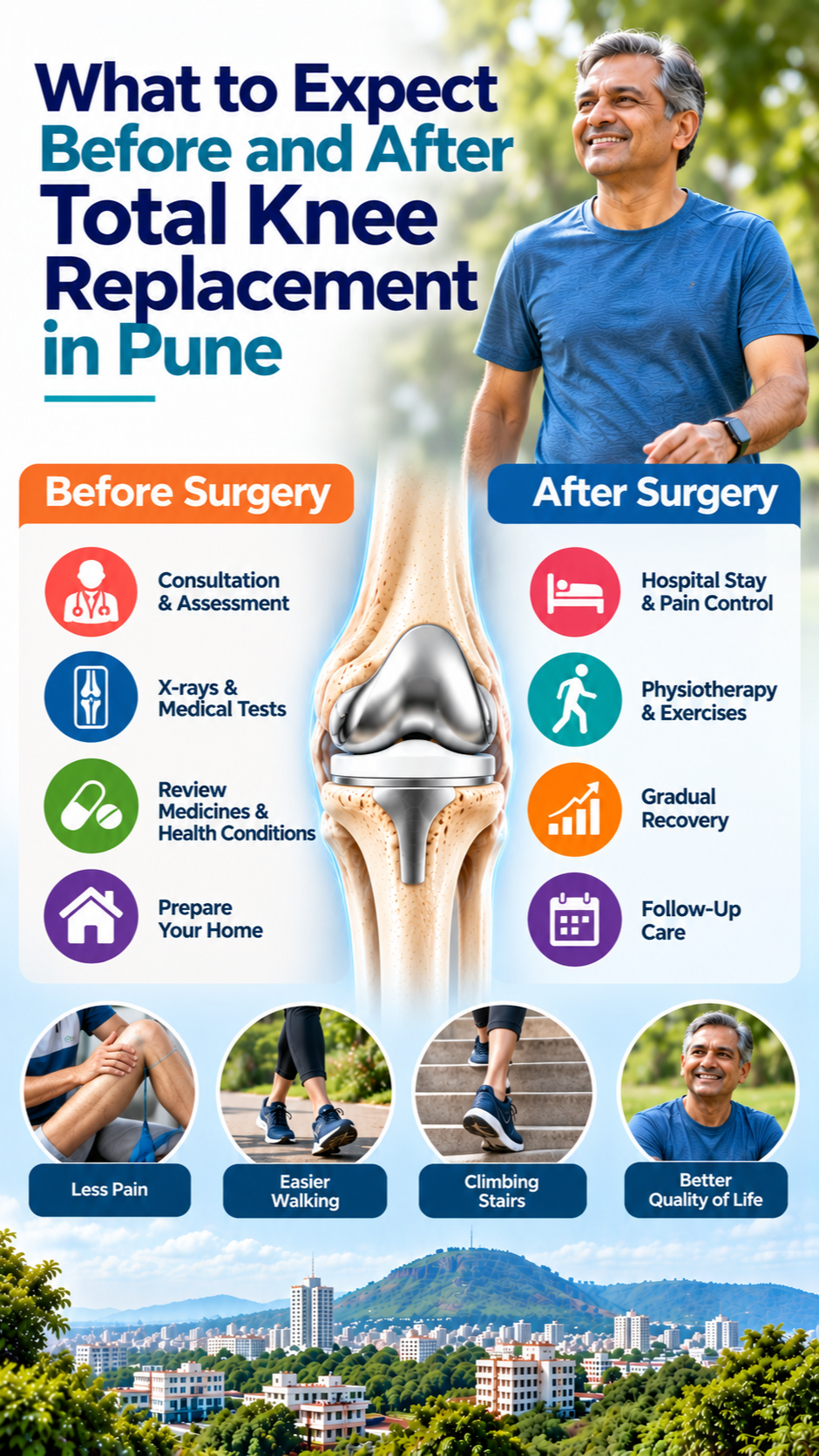
Deciding to undergo Total Knee Replacement is only one part of the treatment journey. Preparation before surgery and rehabilitation afterwards can both influence how smoothly a patient progresses through recovery.
For patients in Pune planning knee replacement, understanding the stages involved can make the process more manageable and help set realistic expectations.
Before Surgery: Understanding the Plan
Before surgery, the orthopaedic team will review the patient's knee condition and general health. Imaging helps with surgical planning, while medical evaluation may identify conditions that need attention before an operation.
Patients should provide information about:
Current medicines
Previous surgeries
Allergies
Existing medical conditions
Previous reactions to anaesthesia
Earlier knee treatments
It is also useful to understand what will happen immediately after surgery.
Preparing the Home
Simple home preparation can make the early recovery period easier.
Patients may arrange:
A safe walking area
Frequently used items within easy reach
Suitable seating
Bathroom safety arrangements
Assistance with household activities
Transportation for follow-up appointments
The amount of assistance needed varies between individuals.
What Happens After Surgery?
Following total knee replacement, the care team focuses on pain control, safe movement and gradual rehabilitation.
Patients are commonly encouraged to begin moving the operated limb relatively early, according to their surgeon and physiotherapy plan.
Rehabilitation can include exercises designed to improve:
Knee movement
Quadriceps strength
Walking ability
Balance
Functional independence
Progress is gradual and differs from one patient to another.
What Should Patients Avoid During Early Recovery?
Patients should follow the specific instructions provided by their surgical and rehabilitation teams.
They should not increase walking distance, exercise intensity or other activities simply because pain has started improving. The tissues still need time to recover.
Medication should also be taken exactly as prescribed.
When Should Patients Contact Their Medical Team?
Patients should understand which symptoms require medical attention after surgery. Increasing wound redness, unusual drainage, significant swelling, fever, severe pain or sudden difficulty using the limb should be discussed promptly with the treating team.
The postoperative plan should include appropriate follow-up.
How Long Does Recovery Take?
Recovery does not occur on a fixed schedule. Some people regain functional independence relatively quickly, while others need more time to rebuild strength and confidence.
Age, muscle strength, overall health, preoperative mobility and rehabilitation participation can influence recovery.
For patients preparing for Total Knee Replacement in Pune, Dr.Ulhas Sonar Consultant Orthopaedic and Knee surgeon provides knee-focused orthopaedic care in the Swargate area.
A useful preoperative consultation should leave the patient knowing why surgery is recommended, what the operation involves, what recovery may look like and which warning signs require medical attention.
Good preparation does not eliminate every challenge of recovery, but it can help patients approach the procedure with a clearer understanding of the process.