Knee stiffness may initially seem like a minor inconvenience. Some people notice difficulty bending their knees after sitting for long periods, while others experience discomfort during morning walks or when climbing stairs.
When these symptoms become frequent, consulting a Knee Specialist in Pune can help identify the underlying problem and determine whether treatment is required.
Why Does Knee Stiffness Develop?
The knee joint depends on healthy cartilage, ligaments, muscles and surrounding tissues to move comfortably.
Stiffness can develop when these structures become inflamed, injured or affected by degenerative changes.
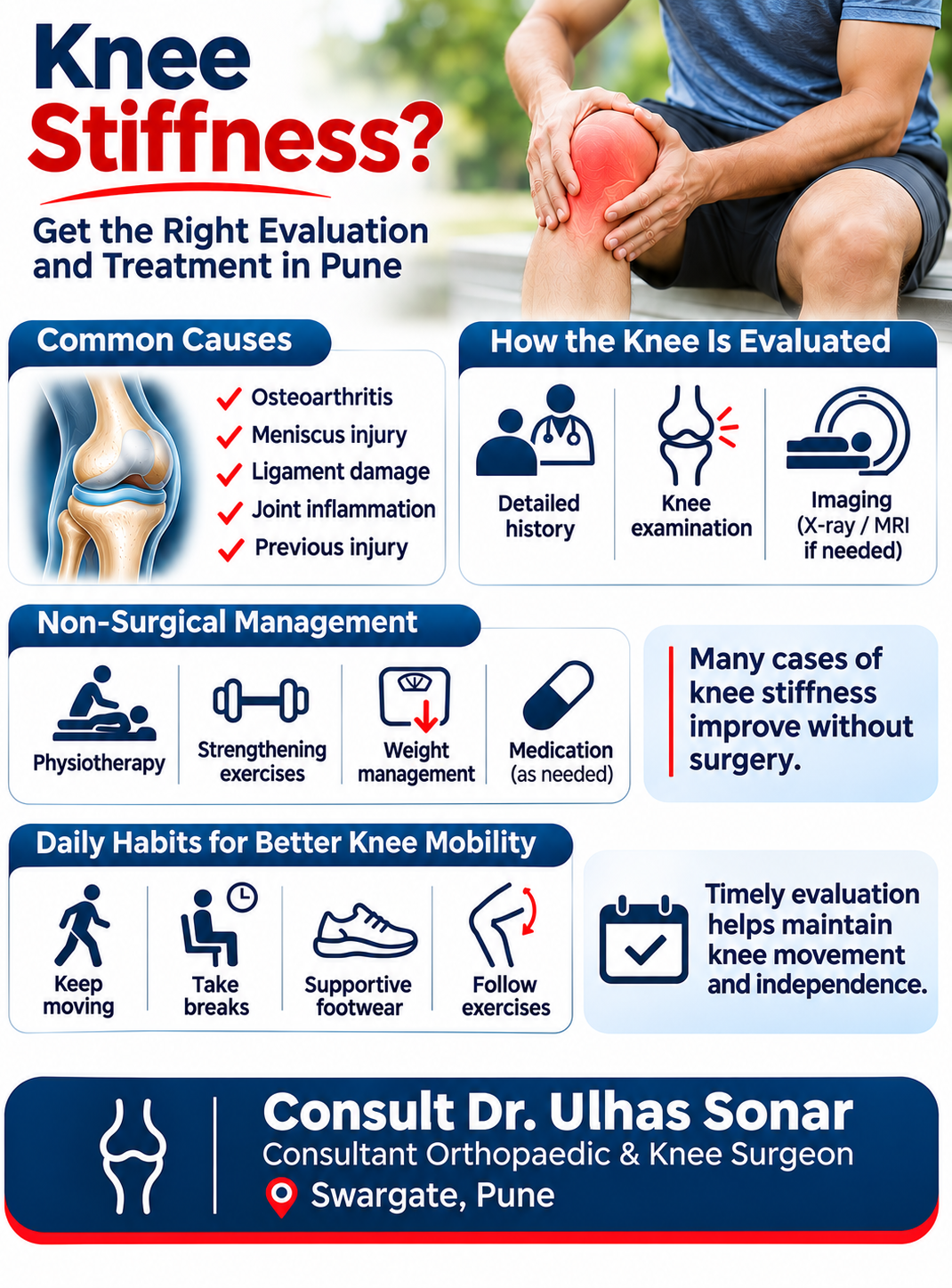
Common contributing conditions include:
Osteoarthritis
Meniscus injuries
Ligament damage
Joint inflammation
Previous fractures or injuries
Reduced joint movement following prolonged inactivity
The pattern of stiffness can provide useful information. For example, stiffness after inactivity may occur with osteoarthritis, while swelling following an injury may suggest damage to internal knee structures.
What Happens During a Knee Specialist Consultation?
The consultation usually begins with a discussion about the patient's symptoms.
The specialist may ask when the discomfort started, which activities make it worse and whether there has been any previous knee injury.
A physical examination may assess:
Knee bending and straightening
Joint tenderness
Swelling
Muscle strength
Ligament stability
Walking pattern
Imaging investigations may be recommended when additional information is needed.
Can Knee Stiffness Improve Without Surgery?
Many causes of knee stiffness can be managed through non-surgical treatment.
Physiotherapy may help improve flexibility and strengthen the muscles supporting the joint. Activity modification and weight management may also reduce unnecessary stress on the knee.
Medicines may be prescribed for pain or inflammation when appropriate.
However, treatment depends on the diagnosis. Exercises suitable for one knee condition may not be appropriate for another, particularly during the early stages of an injury.
What Daily Habits Can Support Knee Mobility?
Maintaining regular, comfortable movement can help reduce stiffness associated with inactivity.
Patients may benefit from:
Taking movement breaks during prolonged sitting
Performing recommended strengthening exercises
Maintaining a healthy body weight
Wearing comfortable, supportive footwear
Avoiding sudden increases in physical activity
Following prescribed rehabilitation exercises
Persistent swelling, locking or instability should be evaluated rather than managed through exercise alone.
Why Is Timely Assessment Important?
Ignoring repeated knee stiffness may allow an underlying condition to continue affecting movement and daily activities.
For patients living in Pune, particularly those managing long commutes or physically demanding routines, understanding the cause of joint discomfort can help them make practical treatment decisions.
Dr. Ulhas Sonar, Consultant Orthopaedic and Knee Surgeon, provides knee-related orthopaedic consultations in the Swargate area of Pune.
A detailed evaluation can help patients understand whether their symptoms are related to arthritis, injury or another joint condition.
With appropriate guidance and treatment, many patients can work towards improving knee movement and maintaining their everyday independence.