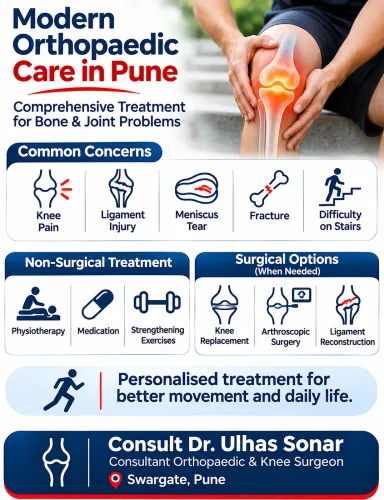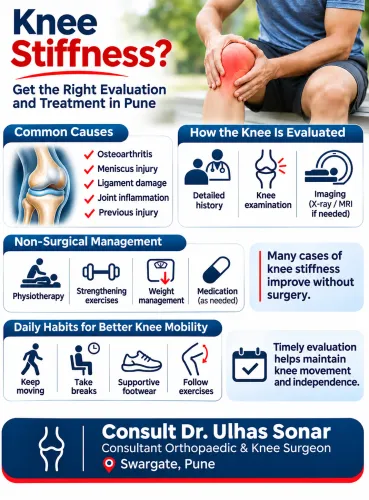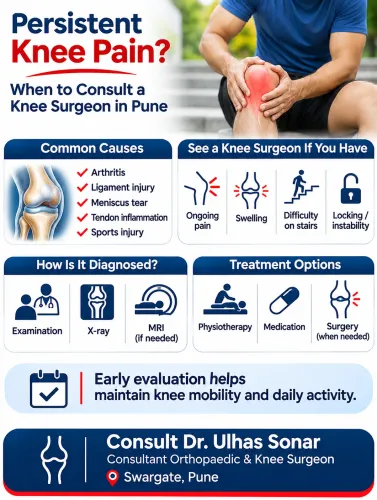
Bone and joint discomfort can affect everyday movement in different ways. Some people experience knee pain while walking, while others notice stiffness, swelling or difficulty performing routine activities. Although minor discomfort may improve with rest, persistent symptoms sometimes indicate an underlying musculoskeletal condition.
Consulting an Orthopaedic Surgeon in Pune can help patients understand the cause of their discomfort and explore appropriate treatment options.
What Conditions Does an Orthopaedic Surgeon Treat?
Orthopaedic care focuses on conditions affecting bones, joints, muscles, ligaments, tendons and other supporting structures.
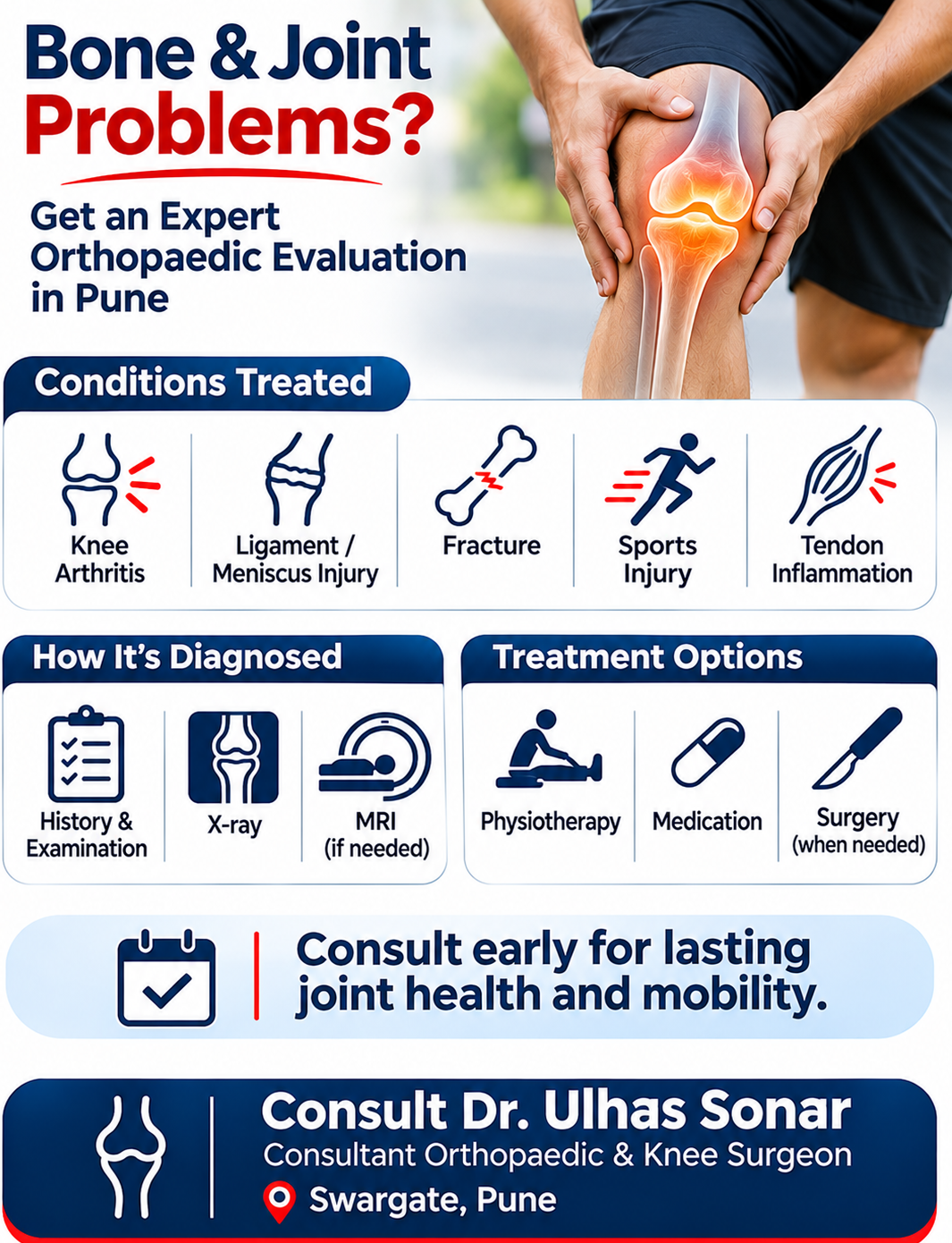
Common conditions evaluated include:
Knee osteoarthritis and joint degeneration
Ligament and meniscus injuries
Bone fractures
Sports-related injuries
Joint stiffness and restricted movement
Tendon inflammation
Problems affecting joint stability
The treatment approach depends on the patient's symptoms, medical history and examination findings.
How Are Bone and Joint Problems Diagnosed?
An orthopaedic consultation generally begins with understanding the patient's symptoms and how they affect daily activities.
The surgeon may ask about previous injuries, the duration of pain and whether movement increases discomfort.
A physical examination helps assess:
Joint movement and flexibility
Swelling and tenderness
Muscle strength
Joint alignment
Stability during movement
Walking difficulties
X-rays, MRI scans or other investigations may be recommended when clinically necessary.
What Treatment Options Are Available?
Many orthopaedic conditions can be managed without surgery.
Depending on the diagnosis, treatment may include physiotherapy, strengthening exercises, appropriate medication and activity modification.
For example, patients with early knee osteoarthritis may benefit from exercises that strengthen the muscles supporting the joint.
Some ligament injuries may also improve through structured rehabilitation.
Surgical treatment may be considered when significant structural damage is present or when appropriate non-surgical treatments have not provided sufficient relief.
When Should Patients Seek Orthopaedic Care?
Persistent joint pain should not be ignored, especially when it begins affecting routine movement.
Patients may require evaluation when they experience repeated swelling, difficulty walking, reduced flexibility or pain following an injury.
Sudden deformity, severe pain after trauma or an inability to bear weight requires urgent assessment.
Why Is Long-Term Joint Care Important?
Healthy joints support mobility and independence throughout life.
For people living in Pune, daily commuting, prolonged sitting and physically demanding work can make existing joint problems more noticeable.
Dr. Ulhas Sonar, Consultant Orthopaedic and Knee Surgeon, provides orthopaedic and knee-focused consultations in the Swargate area of Pune.
Understanding the cause of discomfort is an important first step towards appropriate treatment. A timely orthopaedic assessment can help patients make informed decisions about their bone and joint health.