Knee pain can gradually affect everyday activities, from walking and climbing stairs to sitting comfortably for long periods. While occasional discomfort may improve with rest, persistent pain, swelling or difficulty moving the joint may indicate an underlying condition that requires medical attention.
Consulting a Knee Surgeon in Pune can help patients understand the cause of their symptoms and explore suitable treatment options before the problem begins affecting their quality of life.
What Are the Common Causes of Knee Pain?
Knee discomfort can develop due to injuries, joint degeneration, inflammation or excessive strain on the surrounding muscles and ligaments.
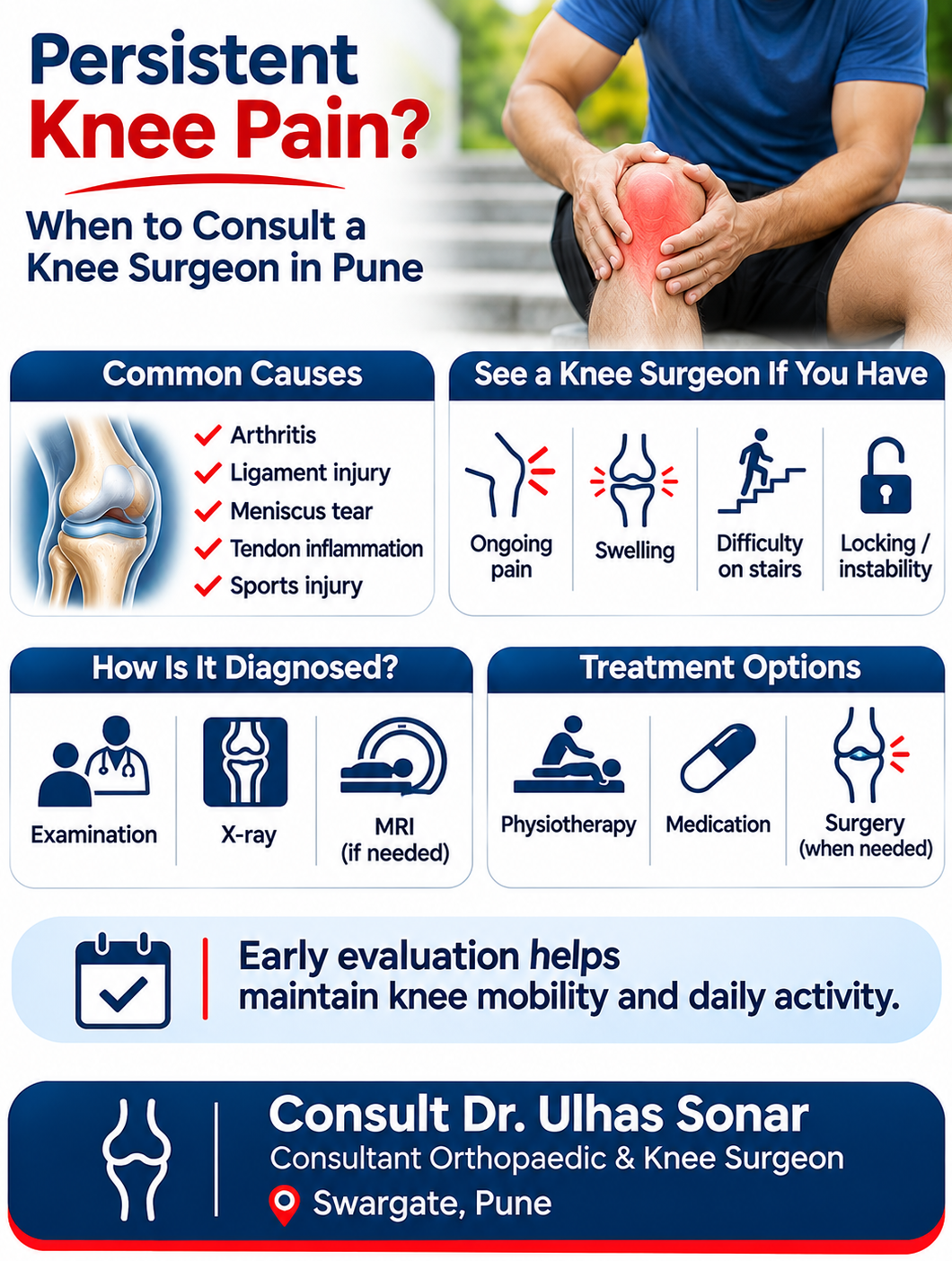
Some common causes include:
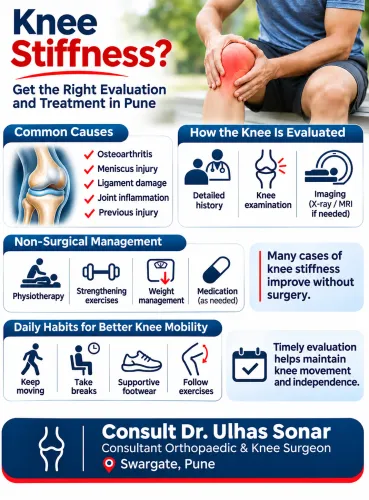
Osteoarthritis and cartilage wear
Ligament injuries
Meniscus tears
Tendon inflammation
Sports-related injuries
Joint stiffness and reduced flexibility
Previous knee injuries
The symptoms and severity may vary depending on the underlying condition.
When Should You Visit a Knee Surgeon?
Not every episode of knee pain requires surgical treatment. However, certain symptoms suggest that a detailed orthopaedic evaluation may be useful.
Patients should consider a consultation when they experience:
Knee pain that continues for several weeks
Frequent swelling around the joint
Difficulty climbing stairs or walking
Knee locking or instability
Reduced ability to bend or straighten the knee
Pain that interferes with sleep or daily activities
Severe pain after an injury, inability to bear weight or a hot, swollen knee accompanied by fever requires prompt medical assessment.
How Does a Knee Surgeon Diagnose Joint Problems?
A knee surgeon usually begins by reviewing the patient's symptoms, medical history and previous injuries.
A physical examination helps assess joint movement, tenderness, swelling and stability.
Depending on the findings, diagnostic investigations may include:
X-rays to assess bones and joint changes
MRI scans to evaluate ligaments, cartilage and other soft tissues
Blood tests when infection or inflammatory conditions are suspected
Not every patient requires all these investigations. The evaluation is based on individual symptoms and clinical findings.
Does Every Knee Problem Require Surgery?
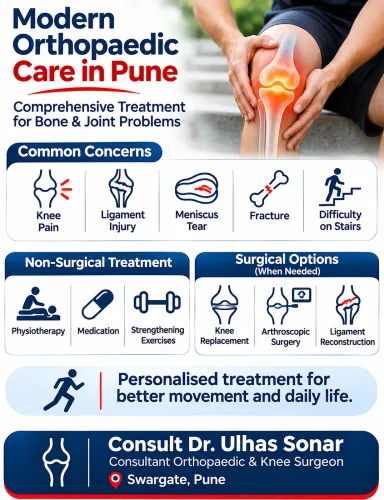
Many knee conditions can be managed without surgery.
Depending on the diagnosis, treatment may involve physiotherapy, strengthening exercises, weight management, activity modification and appropriate medication.
Surgery may be considered when significant structural damage is present or when symptoms continue despite suitable non-surgical treatment.
The decision depends on the patient's condition, activity requirements and overall health.
How Can Early Evaluation Support Better Knee Health?
Identifying the cause of knee discomfort can help patients avoid activities that aggravate their symptoms and begin appropriate treatment.
For individuals in Pune who regularly commute, climb stairs or remain physically active, maintaining knee mobility can make everyday routines more comfortable.
Dr. Ulhas Sonar, Consultant Orthopaedic and Knee Surgeon, provides knee-focused orthopaedic care in the Swargate area of Pune.
A consultation can help patients understand their knee condition, available treatment options and whether surgical intervention is necessary.
Persistent knee pain should not be considered an unavoidable part of ageing. Understanding the problem early can support informed treatment decisions and better long-term joint care.