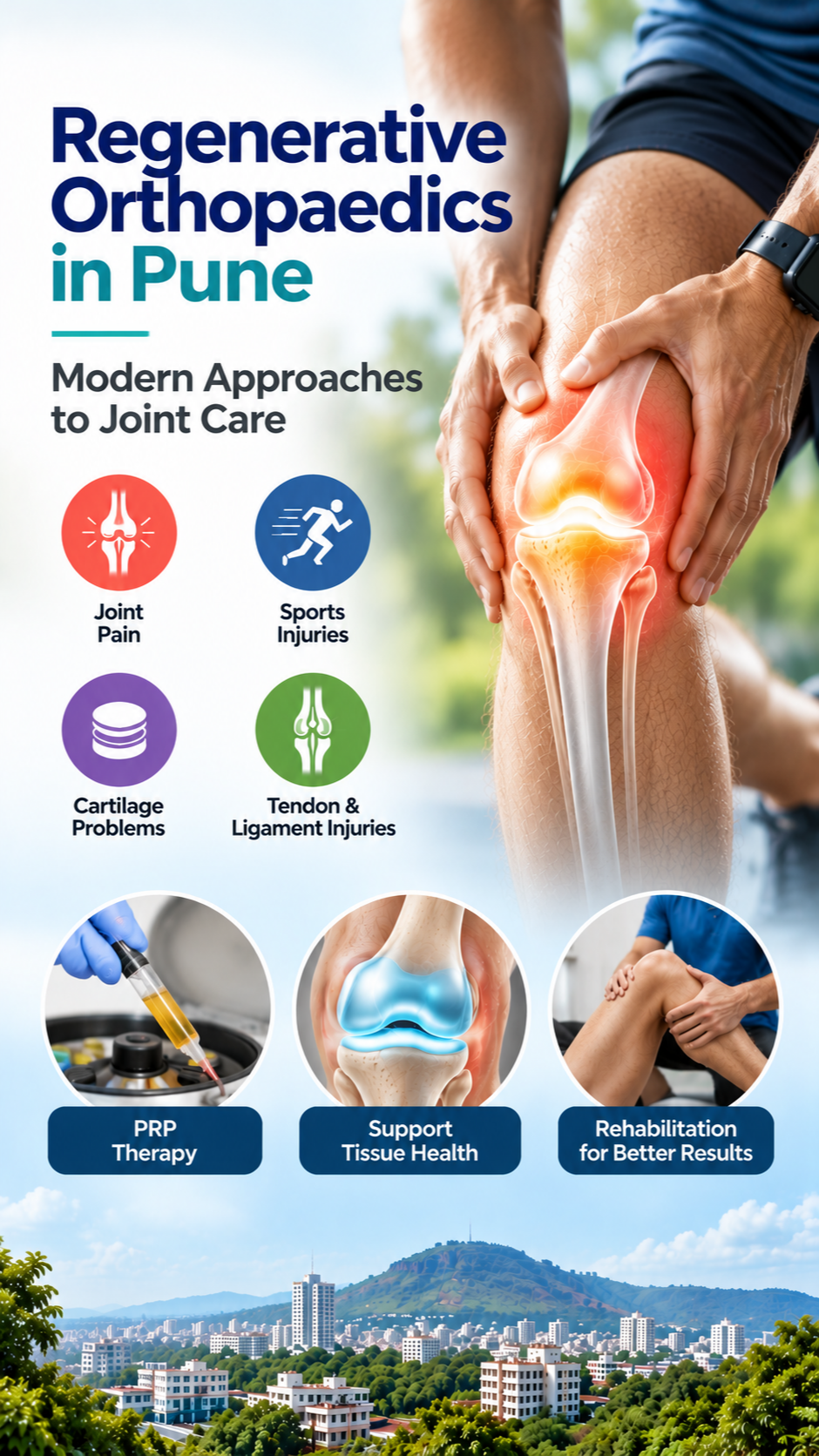
Regenerative Orthopaedics is an area of musculoskeletal medicine that focuses on approaches intended to support tissue health, healing or symptom management. Interest in regenerative treatment has increased among patients looking for alternatives to conventional surgery, particularly for certain tendon, cartilage and joint problems.
However, regenerative medicine is not a universal solution for every orthopaedic condition. Patients should understand what these treatments can realistically offer and where evidence remains limited.
What Does Regenerative Orthopaedics Mean?
The term broadly refers to treatments that aim to support the body's biological processes or improve the local tissue environment.
Depending on the condition, approaches discussed under regenerative medicine may include therapies involving a patient's own biological materials or other biologically based treatments.
The specific treatment, evidence and suitability vary considerably between conditions.
Why Are Patients Interested in These Treatments?
People with musculoskeletal problems often want to know whether surgery can be delayed or avoided. This is particularly relevant for individuals with early joint degeneration, selected tendon conditions or certain sports-related injuries.
Potential reasons for considering regenerative approaches may include:
Persistent symptoms despite initial conservative care
Desire to explore non-surgical options
Early-stage degenerative changes
Certain sports-related soft-tissue conditions
A treatment plan that includes rehabilitation and biological therapy
However, the suitability of regenerative treatment depends on diagnosis rather than simply the presence of pain.
Regenerative Treatment Is Not the Same as Tissue Replacement
One common misunderstanding is that regenerative medicine can automatically restore severely damaged cartilage or rebuild an entire joint.
That is not how these treatments should be understood.
Advanced osteoarthritis with extensive joint damage may require a very different management strategy from a mild or moderate soft-tissue problem. Similarly, a complete ligament injury cannot be assumed to heal simply because a regenerative therapy is used.
Accurate diagnosis is therefore essential.
What Should Patients Ask About Regenerative Medicine?
Before proceeding with any regenerative treatment, patients can ask:
What specific diagnosis is being treated?
What evidence supports this treatment for my condition?
Is the treatment intended to reduce symptoms, support healing, or achieve another goal?
Are there established non-surgical options I should try first?
Could surgery eventually still be necessary?
What rehabilitation is required?
What risks or limitations should I understand?
These questions encourage realistic expectations.
How Does Rehabilitation Fit In?
Regenerative treatment, when appropriate, should not be viewed independently of rehabilitation. Strength, movement patterns, load management and gradual return to activity can influence how a patient manages a musculoskeletal condition.
For sportspeople in Pune, this is particularly relevant because returning to training too quickly can place unnecessary stress on an injured structure.
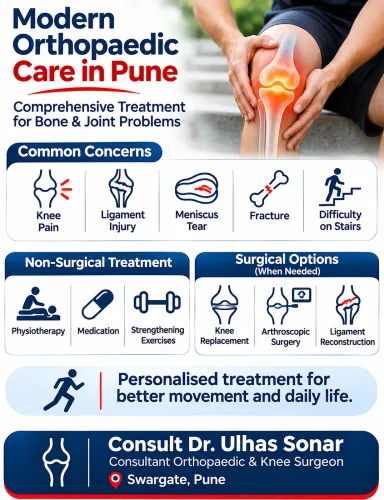
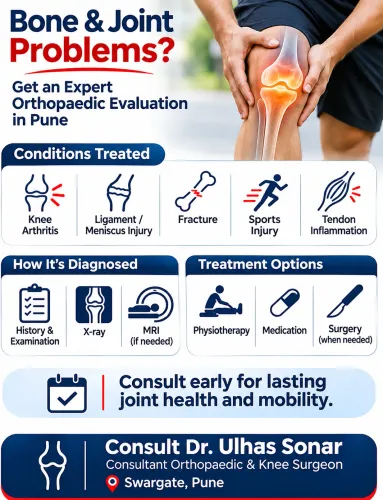
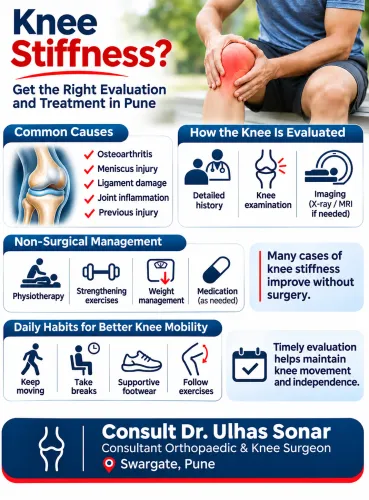
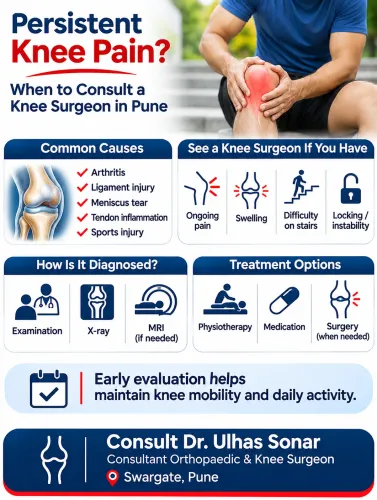
Dr.Ulhas Sonar Consultant Orthopaedic and Knee surgeon in Swargate, Pune, evaluates knee and musculoskeletal conditions to determine whether conventional treatment, rehabilitation, regenerative approaches or surgical options may be appropriate.
The growing interest in Regenerative Medicine makes informed medical guidance especially important. Patients should look beyond promotional claims and ask whether a particular treatment has meaningful evidence for their specific diagnosis.
Modern orthopaedics offers multiple treatment pathways, but the right starting point remains a clear diagnosis, an understanding of treatment alternatives and realistic expectations about outcomes.