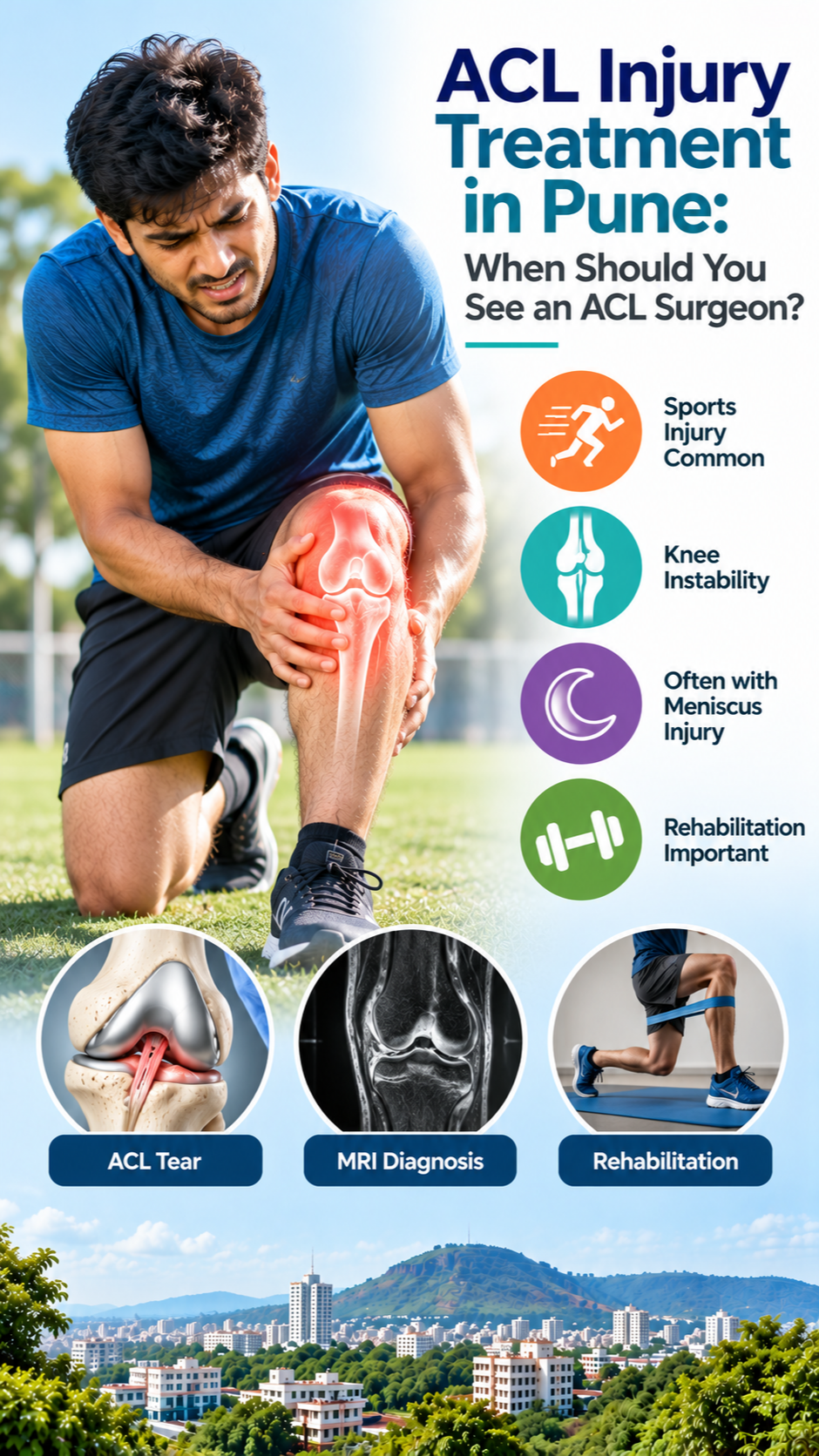
An ACL injury can be disruptive for athletes, active adults and even people who do not participate in organized sports. The anterior cruciate ligament contributes to knee stability, particularly during activities involving turning, pivoting, jumping and sudden changes in direction.
After an injury, one of the most important decisions is determining whether the knee can be managed with rehabilitation or whether surgical reconstruction should be considered.
How Does an ACL Injury Happen?
ACL injuries commonly occur during activities that involve rapid movement changes. They can happen during football, cricket, basketball, badminton, skiing and other sports, but a sports injury is not the only possible cause.
Some people experience a sudden twisting injury accompanied by a popping sensation, swelling or difficulty continuing the activity.
However, symptoms alone cannot confirm an ACL tear.
What Happens After an ACL Injury?
A medical evaluation may involve physical examination and imaging such as an MRI when appropriate.
An assessment can determine whether the ACL is injured and whether there are associated problems involving:
Meniscus
Cartilage
Other ligaments
Bone
Joint surfaces
This matters because combined injuries may influence treatment decisions.
Does Every ACL Tear Require Surgery?
Not necessarily.
Some individuals may be managed with structured rehabilitation, especially when the knee remains functionally stable and their activity requirements are compatible with non-operative care.
Surgery may be considered when instability persists, when the patient wants to return to activities involving significant pivoting, or when associated injuries and clinical findings support reconstruction.
The decision should be individualized.
Why Is Rehabilitation Important?
Whether surgery is performed or not, rehabilitation is an important part of ACL management.
A rehabilitation programme may focus on:
Restoring knee movement
Reducing swelling
Improving quadriceps strength
Developing balance and control
Gradually increasing functional activity
Preparing for return to sport when appropriate
After ACL reconstruction, rehabilitation is also essential for progressing safely through different stages of recovery.
When Should You Seek Specialist Assessment?
An evaluation by an ACL Surgeon or sports-focused orthopaedic specialist is particularly useful if:
The knee repeatedly gives way
Swelling keeps returning
You cannot return to normal activities
You experience instability during turning
You have difficulty extending or bending the knee
An MRI has identified an ACL injury
You want to return to pivoting sports
For athletes and active individuals in Pune, early specialist assessment can help establish the injury pattern and appropriate next steps.
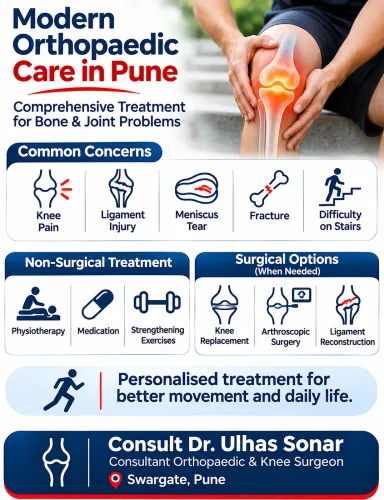
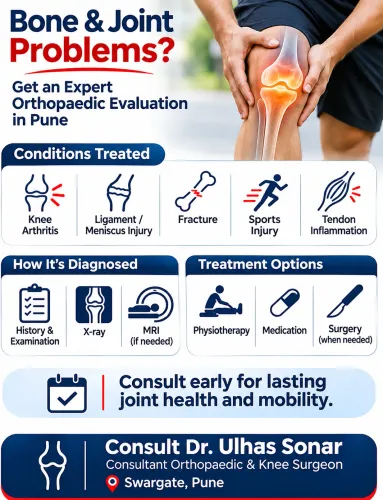
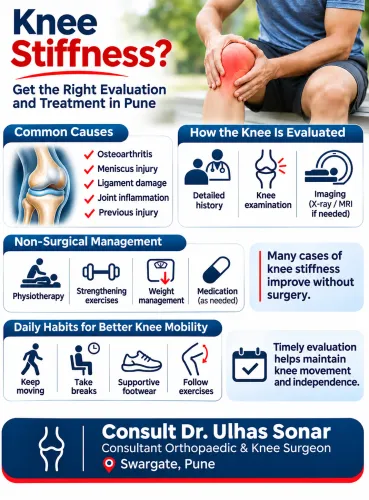
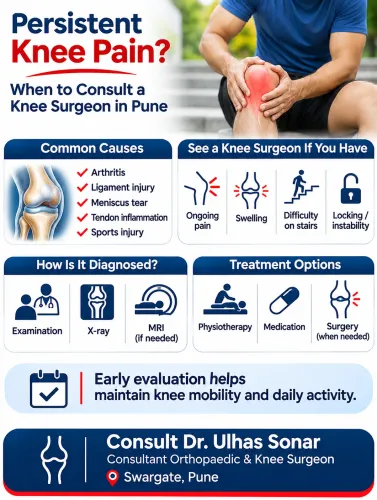
Dr.Ulhas Sonar Consultant Orthopaedic and Knee surgeon in Swargate provides assessment of sports-related knee injuries and ligament conditions.
The objective is not simply to determine whether an ACL is torn. A useful consultation should also establish how stable the knee is, what other structures may be injured, what activities the patient wants to return to and whether rehabilitation or surgery is more appropriate.